
Kayaking the Soča River
Turquoise alpine water, rapids for every stage of the learning curve, and a valley Gene17 has coached in for over two decades. Here's how to plan a Soča kayaking trip from the US.
What the Soča is like
The Soča is famous for one thing above all: the colour. The river runs a startling, clear turquoise from its headwaters in the Julian Alps down through a string of gorges and open gravel-bed rapids, and photos genuinely don't exaggerate it. Beyond the postcard looks, it's a classic alpine learning river — cool, clean water, distinct rapids separated by recovery pools, and road access along most of the valley, so sections can be matched to a group's ability rather than the other way round.
That combination is why the Soča Valley has become one of Europe's best-known whitewater training grounds. Everything about the river lends itself to skill development: chilled-out lower sections for working on technique, busier alpine water upstream when you're ready to test it, and enough variety that a full week of coaching never repeats itself. Gene17 has been developing paddlers here for well over fifteen years, operating from the upper valley around Bovec.
Grades and water type
The valley offers everything from friendly Class II read-and-run water to punchy Class IV alpine rapids. Gene17's coached weeks on the Soča cover roughly Class II–III for skills-focused trips and Class III–IV for the more advanced programmes. The water is snow- and rain-fed rather than dam-released, so levels move with the season — one more reason a local coach who knows which section works at which level makes a real difference.
Best season
The Soča is generally paddled from spring through autumn. Spring snowmelt tends to bring higher, pushier flows and the biggest alpine feel; summer and early autumn are usually lower, warmer and more forgiving — well suited to learning. Gene17's current Soča departures run in April and in September–October, bracketing the busy mid-summer rafting season.
Who it suits
Honestly: the Soča is at its best for paddlers who already have basic river skills and want to build real whitewater competence — the Class II–III paddler working toward Class III–IV. If you can control your boat on moving water and roll (or are close), you'll get a huge amount from a coached week here. It's not a first-ever-time-in-a-kayak destination on Gene17's trips, and expert boaters chasing Class V will find the valley more scenic than scary — for them, Norway or Italian steep creeking is the better fit.
Gene17 trips on the Soča
All three Soča programmes are eight-day, arrival-to-departure weeks with a maximum of six paddlers, coached by Paddle UK Level 5 qualified coaches.
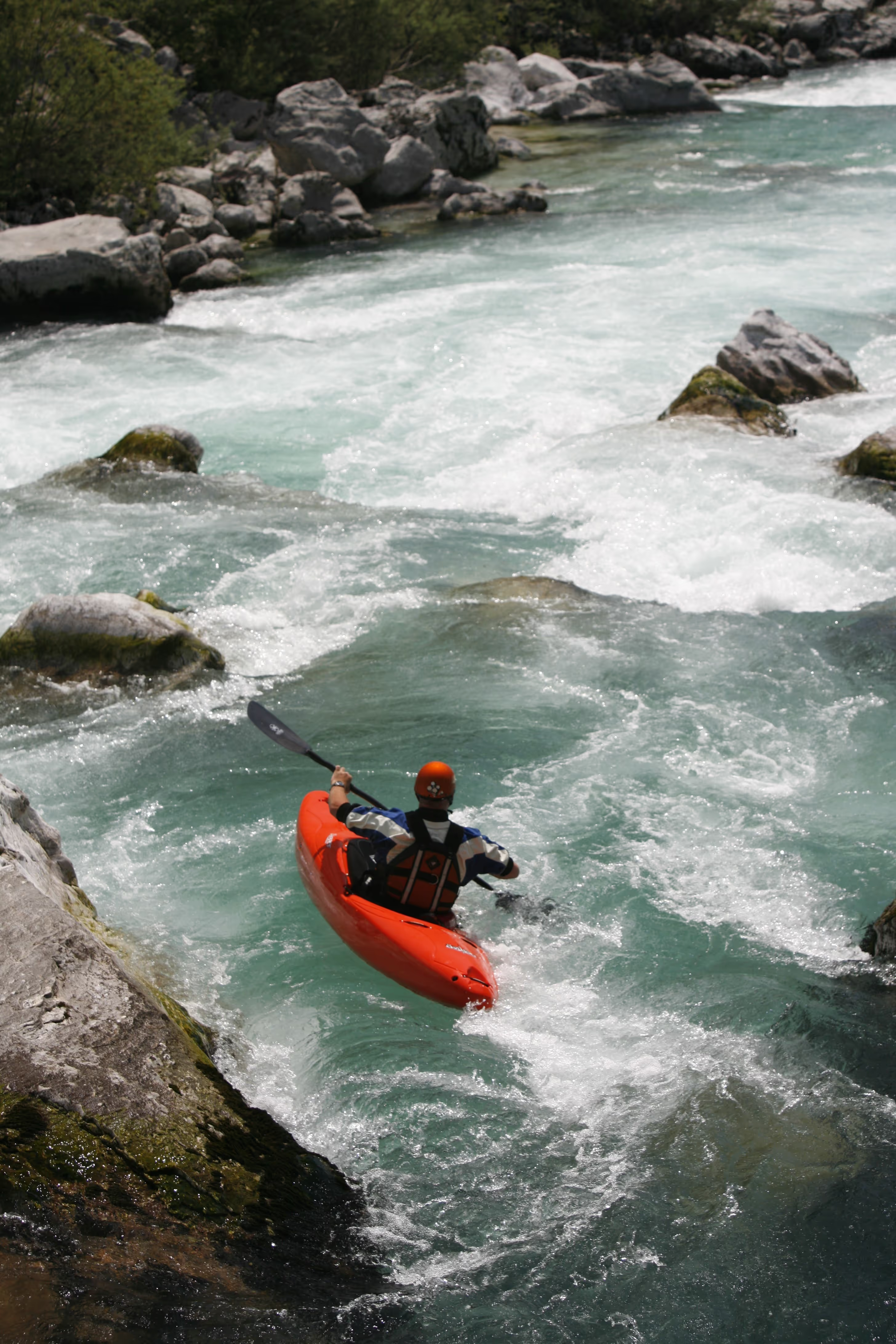
Launch Pad
For the paddler missing an element or two — a week that rebuilds how your kayak moves through whitewater and gets you ready to step up.
View trip →
Fundamental Core
Develop the fundamental core skills of whitewater kayaking, finishing the week with a big day out on an alpine classic.
View trip →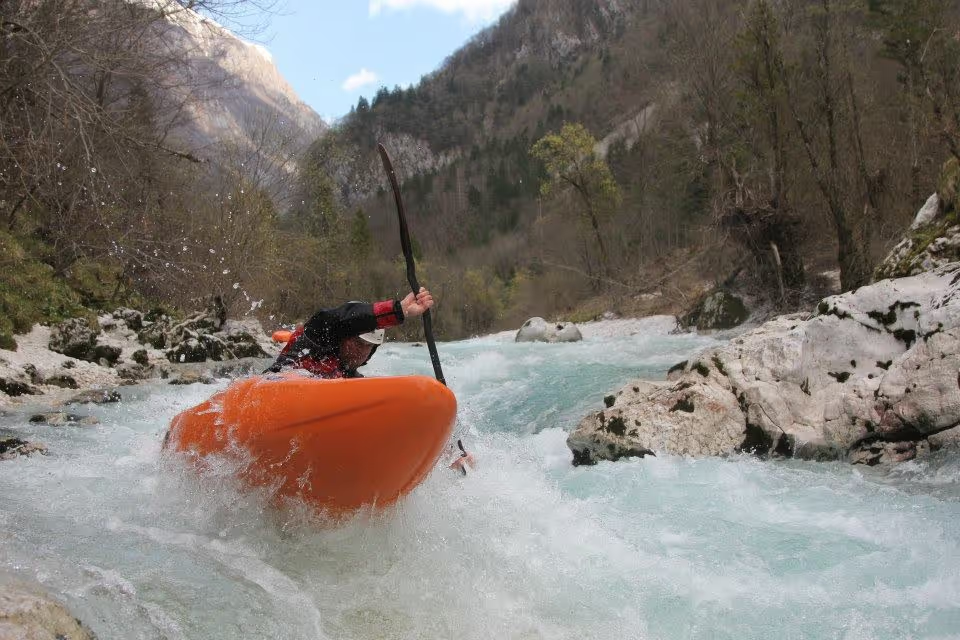
Next Generation
A springtime immersion for aspiring coaches and guides — advanced paddling, leadership and safety training, by application.
View trip →Coming from the US
Slovenia is one of the easier European whitewater destinations to reach from North America. Fly into Ljubljana (LJU) — usually one connection through a European hub — or use Venice (VCE) or Zagreb (ZAG), which often have more flight choice. From any of the three it's a road transfer of around 2–3 hours to the upper Soča Valley, and the trip itineraries finish with an airport drop-off on departure day.
Nearest airports
Ljubljana (LJU); Venice (VCE) and Zagreb (ZAG) also work
Transfer
Around 2–3 hours by road to the Soča Valley
Currency
Euro (EUR)
Plugs
Type C/F, 230V — bring a US-to-EU adapter
Language on trip
All coaching in English
Entry
Valid passport; no visa under 90 days. ETIAS is being phased in — check before travel
Soča River FAQs
How do I get to the Soča Valley from the US?
Do I need a visa to kayak in Slovenia?
What class of whitewater is the Soča River?
Can I rent a kayak in Slovenia, or should I bring my own?
When is the best time to kayak the Soča?
Are the trips run in English?
Paddle the
Soča Valley
Six-paddler groups, Paddle UK Level 5 coaching, and a river that turns Class III paddlers into Class IV paddlers.