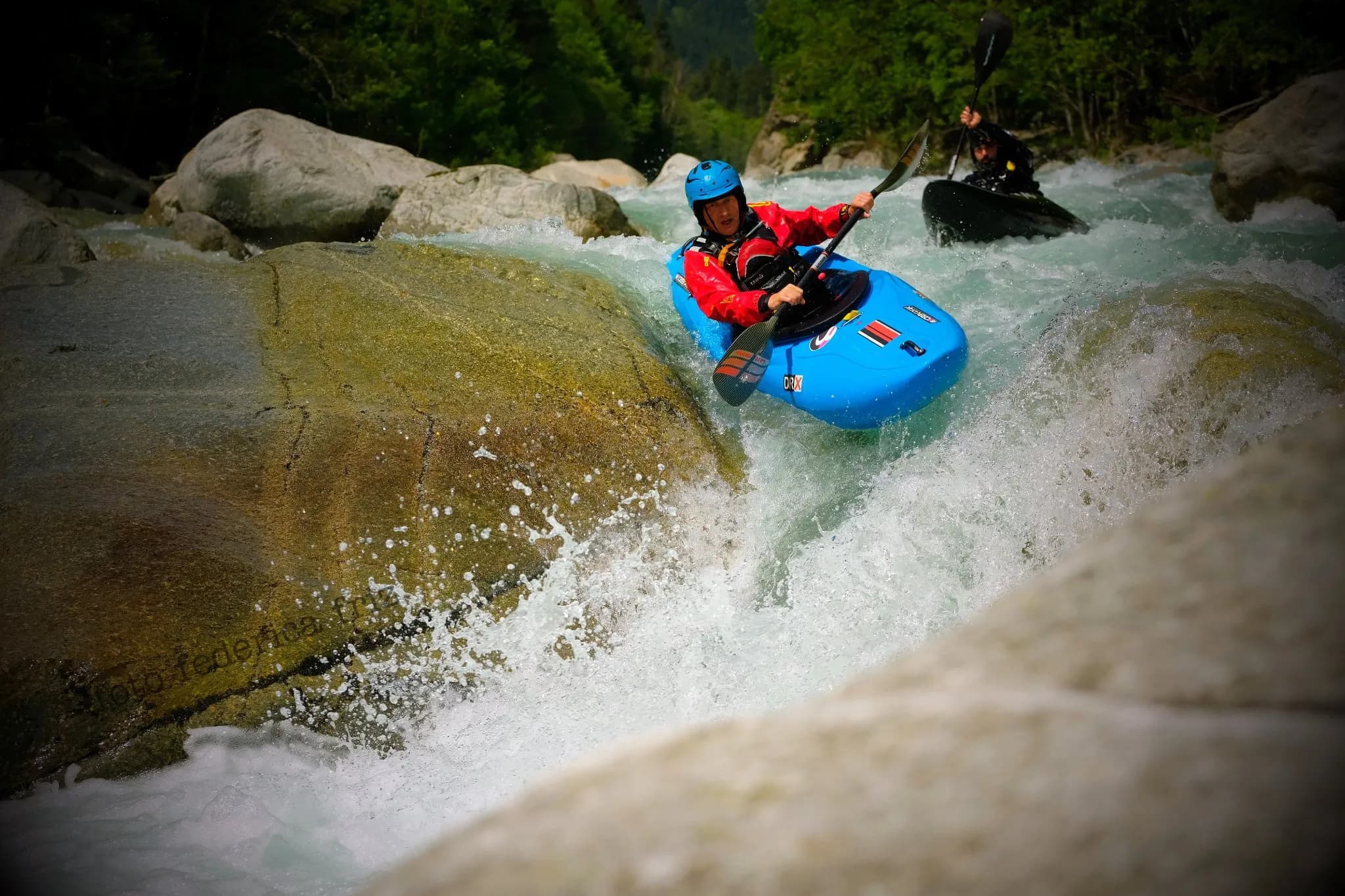
Whitewater kayaking in Europe
Alpine rivers, glacial summer flows and granite creeks — Europe packs an astonishing variety of whitewater into a few flight hours. Here's where to go, by skill level and season.
Why Europe for a kayaking vacation
American paddlers tend to think of Europe as a castles-and-cafés destination, not a whitewater one. That's a mistake. The Alps and the Scandinavian mountains hold some of the most varied, accessible whitewater on the planet: clear snowmelt rivers with road access, short transfers between valleys, and — unlike a lot of wilderness paddling back home — a warm bed, good food and an espresso at the end of every river day. The distances are compact by US standards, English is widely spoken, and the same international Class I–VI scale applies, so you can judge everything against rivers you already know.
The catch is choosing well. European rivers run on snowmelt and glacial flows, so the right destination depends on two things: your skill level, and your dates. This guide covers the three destinations Gene17 has coached on for over two decades — each has its own in-depth guide linked below.
The three destinations at a glance
The Soča Valley
Turquoise alpine water and Europe’s classic learning river. The place to build fundamentals and step from Class III toward Class IV.
Read the full guide →Norway · Class III–V · SummerThe Sjoa Region
Norway’s best-known whitewater river, glacial-fed all summer. World-class intermediate water plus slides, drops and waterfalls for advanced boaters.
Read the full guide →Italy · Class III–IV · SpringValsesia, Piemonte
Smooth granite slides and bedrock creeks on spring meltwater — the most forgiving place in Europe to learn to run steep water. Plus the food.
Read the full guide →If you're building fundamentals: Slovenia
The Soča River is Europe's classic learning river: famously clear turquoise water, distinct rapids with recovery pools, and sections from Class II to Class IV stacked along one valley. If you're a Class II–III paddler who wants to become a genuinely solid Class III–IV boater, this is where to spend a week. Gene17's Fundamental Core and Launch Pad weeks run here in spring and autumn, and the Next Generation programme uses the same valley for paddlers heading toward coaching and guiding careers.
If you're an intermediate stepping up: Norway
The Sjoa region holds more quality Class III–IV than almost anywhere in the world, all running reliably through summer on glacial flows while much of the Alps drops low. The Progressive & Dynamic week is the flagship intermediate trip — big-volume technique, creeking skills and river-running in a low-consequence arena — and the two-day Sjoa River Skills Weekend makes an easy warm-up. Long midsummer daylight means the days feel endless in the best way.
If you're chasing steep water: Italy and Norway
Learning to run slides and drops is a skill of its own, and Valsesia in Italy is Europe's classroom for it — steep, technical, surprisingly forgiving granite on spring meltwater, with Intro to Steep Creeking and Steep Creeking covering the Class III–IV progression. Boaters already solid at Class IV should look north: Sjoa Creeking and the Valldal Road Trip take on Norway's Class IV–V slides, waterfalls and canyons.
Planning by season
Snowmelt sets the calendar. Roughly: Italy's creeks in May and early June, Norway from mid-June through August, and the Soča in April and again in September–October. Stack them and there's coached European whitewater available from spring to autumn — plenty of paddlers do Italy one year and Norway the next as a natural progression.
Spring (Apr–Jun)
Soča skills weeks; Valsesia steep creeking on meltwater
Summer (Jun–Aug)
Norway — Sjoa trips and the Valldal Road Trip on glacial flows
Autumn (Sep–Oct)
Soča again — lower, friendlier water and quiet valleys
Flights
Ljubljana/Venice for Slovenia, Oslo for Norway, Milan for Italy — typically one stop from the US
Money
Euro in Slovenia and Italy; Norwegian krone in Norway
Entry
Passport, no visa under 90 days (Schengen); ETIAS being phased in — check before travel
Why paddle with Gene17
Gene17 has been coaching whitewater in these exact valleys since 2002. Trips run with a maximum of six paddlers, led by Paddle UK Level 5 qualified coaches who paddle these rivers for themselves, and every trip includes expert coaching and guiding, river logistics and safety cover, and a progression plan tailored to your ability. All coaching is in English — which, for a trip built around briefings, feedback and safety talks, matters more than any brochure photo.
Europe trip planning FAQs
Where is the best whitewater kayaking in Europe?
When should I plan a European kayaking vacation?
Do I need to bring my own kayak from the US?
What paperwork do US citizens need for a kayaking trip to Europe?
Are guided trips in Europe run in English?
How do European river grades compare to US river classes?
Pick your river,
we'll do the rest
Slovenia, Norway or Italy — six-paddler groups and coaching that moves you up a grade, whichever valley you choose.